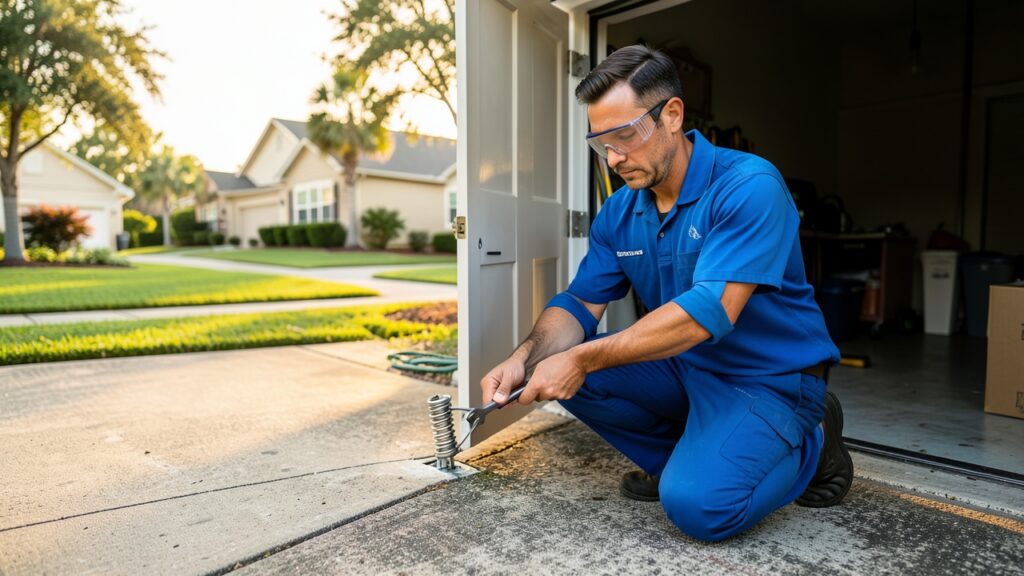
Maximize Your Garage Door Spring Replacement Frequency Explained Results in 2026
August 27, 2026 — DIY Garage Solutions
After years of doing this work, we can tell you exactly why many homeowners miss the mark on how often to replace garage springs—and why that misstep often leads to unexpected compliance headaches. Just last month, we received a call from a homeowner whose broken garage door spring not only caused an abrupt shutdown of their system but also revealed that their outdated setup was out of step with current building codes. The fix wasn’t just about swapping out worn components; it required careful attention to the regulations behind the scenes.
Table of Contents
- What We’ve Learned Through Years of Garage Door Repair
- The Standard Advice on Garage Door Repair: Why It Often Misses the Mark
- How to Know When to Call for Professional Garage Door Repair
- Tips to Recognize Signs You Need Garage Door Repair Early
- The Standard Advice on Garage Door Maintenance Is Usually Wrong — Here’s Why
- How Much Does Garage Door Panel Replacement Cost — What to Expect and How to Prepare
- Summary and Next Steps for Your Garage Door Repair Needs
Garage door spring replacement is often seen as a straightforward repair, but what most people don’t realize is that the frequency of replacement isn’t only about wear and tear—it’s deeply tied to local building codes and safety standards. Our team has seen more of these situations than we can count, where neglecting the recommended replacement interval leads to violations that could have been avoided with timely maintenance and inspections. Navigating the building codes adds a layer of complexity that many homeowners overlook, often resulting in fines or forced upgrades.
The short answer: staying compliant with garage door spring replacement frequency isn’t just a matter of keeping your door working smoothly; it’s essential for safety and regulatory reasons. We’ve handled cases where outdated springs posed serious safety risks, and we know how to align repairs with standards such as UL 325, which governs door operation and safety. Understanding how often to replace garage springs can help you avoid those pitfalls, accomplish outstanding repair outcomes, and keep your home both functional and compliant. For more information, see our guide on What Brands of Garage Door Springs Are Commonly Replaced in Davie Rolling Hills FL?.
📋 Quick Answer
Maximizing your garage door spring replacement frequency involves regular maintenance, proper usage, and timely inspections to extend spring lifespan up to 10,000 cycles or more. In 2026, advancements in high-tension spring materials and smart monitoring systems further enhance durability and predict replacement needs accurately, reducing unexpected failures.
What We’ve Learned Through Years of Garage Door Repair
With years of experience helping clients resolve a wide range of garage door issues, our team has accumulated a deep understanding of common problems and effective solutions. Time and again, we’ve seen how a seemingly simple malfunction can escalate quickly without the right attention. For example, a recent emergency garage door repair call involved a broken cable that had started fraying quietly over weeks. The homeowner had delayed action, hoping for a quick fix, but by the time we arrived, the entire door was off balance and stuck halfway open. Our prompt cable replacement and realignment restored functionality within a few hours, preventing a potentially dangerous situation.
We’ve noticed that many problems stem from overlooked maintenance. Affordable garage door maintenance, such as lubricating moving parts and inspecting cables, often prevents costly repairs. We find that clients who schedule routine check-ups avoid emergency calls and extend the lifespan of their doors. Another frequent challenge is garage door opener troubleshooting. Sometimes, what looks like a mechanical failure is just an electrical or sensor issue—a dead battery in the remote, misaligned sensors, or wiring corrosion. We approach each problem holistically, ensuring the entire system works effortlessly together. For more information, see our guide on How to Decide When to DIY or Hire Experts for Garage Door Repair.
The Standard Advice on Garage Door Repair: Why It Often Misses the Mark
The standard advice on garage door repair is usually straightforward: tighten screws, lubricate parts, or replace the broken component. That’s usually wrong — and here’s why. Most companies tell you quick fixes will keep your door running smoothly. Here’s what our crews have actually found doing this work, day in and day out: shortcuts frequently lead to repeat breakdowns and increased costs. For instance, tightening a cable is not enough if the underlying hardware is rusted, the drum is misaligned, or the springs are worn unevenly.
Another common misconception is that DIY solutions are always safe and effective. We observe that attempts to repair garage door cables or springs without proper tools or knowledge often cause more harm than good, sometimes resulting in serious injury or total system failure. What most guides recommend—replacing parts piecemeal—can ignore the bigger picture, such as the door’s balance and tension. Our approach is straightforward: identify the root cause, then address all related issues to improve safety and function, not just the obvious symptoms. For more information, see our guide on What Are the Emergency Garage Door Repair Options Available in Davie Rolling Hills FL?.
We also challenge the idea that emergency garage door repair requires immediate full replacement. From what we’ve seen, many doors can be restored to full operational condition with specific, targeted repairs. For example, a recent service call for a stuck door revealed that a garage door opener troubleshooting session, combined with a cable adjustment, resolved the problem without any costly part swaps. This perspective often saves clients significant time and expense.
How to Know When to Call for Professional Garage Door Repair
What causes a garage door to malfunction beyond basic wear and tear? How much does garage door repair cost typically? And when should you call a professional? These questions come up regularly from homeowners trying to balance safety, convenience, and budget.
Here’s the thing: if your garage door is making unusual grinding noises, moving unevenly, or failing to stay open or closed, it’s time to seek professional help. Attempting repairs on a door with broken springs or cables can be unsafe. We often find that early intervention prevents more expensive repairs down the line.
Another sign is if your remote or automatic opener stops working properly. While some fixes are straightforward, such as replacing batteries or realigning sensors, other issues can involve internal electrical faults best handled by specialists. Honest troubleshooting helps avoid unnecessary replacement of functioning parts.
In terms of cost, most repairs fall within a moderate range, but prices vary depending on the problem’s complexity and parts involved. We’ve noticed that transparent communication about repair options—including affordable garage door maintenance plans—helps clients make informed decisions that suit their situation.
Our experience shows that timely service not only enhances door performance but also improves safety for families. A well-maintained door reduces risks of accidents caused by unexpected failures. That’s why we encourage a proactive approach rather than waiting for an emergency repair to become unavoidable.
Tips to Recognize Signs You Need Garage Door Repair Early
Spotting the need for garage door repair before a minor annoyance becomes a major issue can save significant time and expense. Our experience shows that many of the common garage door problems start subtly, and homeowners often overlook the early warning signs.
Here are a few practical pointers for recognizing when your garage door requires attention:
- Unusual Noises: Grinding, squeaking, or banging sounds when operating the door usually indicate worn or misaligned components. These noises often precede breakdowns that could leave the door stuck or unsafe.
- Slow or Jerky Movement: If the door moves slower than usual or jerks during operation, this points to issues with the springs, rollers, or opener mechanism. Smooth, consistent motion is a hallmark of a well-functioning system.
- Visible Wear on Panels or Tracks: Dents, cracks, or rust on panels, and bent or blocked tracks, suggest it’s time for an inspection. Ignoring these signs often increases the garage door panel replacement cost later.
- Door Doesn’t Stay Open or Closed: This can be a sign of tension problems in the springs or malfunctioning sensors. Industry safety standards require garage doors to hold their position securely to prevent accidents.
- Remote or Wall Control Malfunctions: When controls become inconsistent, the issue often lies with the opener’s electronics or wiring, not just batteries.
- Excess Lubrication Attracts Dirt and Dust: Applying lubricant too frequently or in excess ends up trapping grime inside rollers and hinges. This speeds up wear rather than preventing it. We advise targeted, moderate lubrication — primarily on rollers and hinges — and only when the door shows signs of stiffness or noise.
- Overtightening Components Causes Premature Damage: Tightening bolts to the “max” can restrict movement or warp tracks, which then leads to jamming or uneven door operation. Proper torque matters; too loose causes rattling, too tight causes strain.
- Ignoring Spring Tension Adjustments Can Be Dangerous: Springs require precise tension balance. Many DIY guides underestimate the risk of improper adjustment, which can lead to snap-back injuries or door malfunction. Attempting spring adjustment without proper equipment or knowledge is a shortcut that often results in higher repair costs.
- Type of Material: Steel panels are usually less expensive than wood or composite, but each material affects durability and maintenance needs differently.
- Panel Design and Size: Custom or specialty designs, such as carriage house styles or insulated panels, tend to increase costs. Larger panels require more work and higher material costs.
- Extent of Damage: Sometimes, only one panel is damaged, but adjacent parts may need inspection or replacement. Minor dents may be fixed with less expense, but cracks or structural damage typically require full panel replacement.
- Labor Complexity: Removing and installing panels on sectional garage doors requires careful alignment and balance. Our team’s direct, clear communication helps homeowners understand when additional repairs or adjustments will affect the final cost.
- Local Market Factors: Prices also reflect regional supply costs and contractor availability
- Safety first. A routine garage door safety inspection is more than just a checkbox. It catches hidden issues that might not be obvious until they cause bigger problems. Springs, cables, rollers, and sensors all need regular attention to prevent accidents or failures.
- Garage door spring replacement frequency varies. Springs wear out with use, but their lifespan depends on several factors including the door’s weight, usage patterns, and environmental conditions. We often see springs needing replacement after a few years or a certain number of cycles. Being aware of this helps avoid that shocking moment when the spring snaps unexpectedly.
- Timely repairs prevent costlier damage. Small problems can snowball. A noisy door might signal worn rollers; a door that sticks may have misaligned tracks. Fixing these early keeps more expensive repairs or replacements at bay.
- Not every repair is a DIY job. Some work is straightforward, but others—especially those involving springs or electrical components—carry risks that aren’t worth taking without proper tools and experience. For more on deciding when to DIY or hire help, this resource can clarify your options: How to Decide When to DIY or Hire Experts for Garage Door Repair.
- Finding trusted garage door repair near me can feel overwhelming. Our experience tells us that responsiveness, clear communication, and the ability to explain what’s going on without jargon build real trust. It’s not about flashy promises; it’s about reliable information and follow-through.
Following these guidelines will help maximize your door’s lifespan and maintain safety around your home. Quick responsiveness is key here — in our experience, addressing these signs early often means repairs are more straightforward and affordable.
For more on deciding when to DIY or call professionals, see How to Decide When to DIY or Hire Experts for Garage Door Repair.
The Standard Advice on Garage Door Maintenance Is Usually Wrong — Here’s Why
You’ll see most guides recommending regular DIY lubrication of all moving parts and tightening every loose bolt as the go-to maintenance strategy. We stopped doing it that way after noticing a surprising outcome: over-lubrication and overtightening often cause more harm than good.
Here’s what our work has actually found doing this day in and day out:
The short answer: effective maintenance is about balance and precision, not just routine tasks. We recommend following verified, manufacturer-specific guidelines to avoid costly mistakes that many generic guides overlook.
Understanding these nuances keeps your garage door secure and extends its operational life. If you want a detailed, reliable guide on emergency situations, check out What Are the Emergency Garage Door Repair Options Available in Davie Rolling Hills FL?.
How Much Does Garage Door Panel Replacement Cost — What to Expect and How to Prepare
Garage door panel replacement cost varies widely depending on the door’s make, model, and material, as well as labor and additional parts needed. From our direct experience, most replacements fall between moderate to premium price points, but the specifics matter greatly.
Here are factors that influence the cost and how you can prepare:
People Also Ask
How much does garage door repair typically cost?
Garage door repair costs vary, typically ranging from $100 to $350 depending on the issue. Minor repairs like spring replacement or sensor fixes are cheaper, while major part replacements or motor repairs cost more. Always get a detailed estimate before starting work.
What are common signs that my garage door needs repair?
Common signs include unusual noises, slow or jerky movement, door not opening or closing fully, and visible damage to springs or cables. If your garage door reverses unexpectedly or remote control stops working, it’s time to call a professional.
Can I fix a garage door spring myself?
Fixing a garage door spring is dangerous due to high tension and is not recommended for amateurs. It’s best to hire a certified technician to avoid injury and ensure proper installation. DIY attempts can cause further damage or severe accidents.
How often should garage door maintenance be performed?
Garage doors should be maintained at least twice a year. Regular maintenance includes lubricating moving parts, checking balance, inspecting cables and springs, and testing safety features. Scheduled upkeep prevents breakdowns and extends the door’s lifespan.
Why is my garage door remote not working?
Common reasons for a remote not working include dead batteries, signal interference, or the remote needing reprogramming. First, replace the batteries, then try re-syncing the remote to the opener. If issues persist, check for sensor problems or call a technician.
❓ Frequently Asked Questions
Summary and Next Steps for Your Garage Door Repair Needs
Having taken a close look at garage door repair from multiple angles, we want to leave you with the key takeaways that can make a real difference in your garage door’s safety, functionality, and longevity. Garage doors are often overlooked until something goes wrong—but the truth is, proactive care and knowing when to seek professional help can save you hassle and unexpected costs down the road.
What You Should Remember About Garage Door Repair
So, What Are Your Next Steps?
1. Schedule a garage door safety inspection if you haven’t had one recently. This simple check can expose hidden wear and tear before it leads to failure.
2. Review your door’s operation. Take note of any unusual noises, slow movement, or sticking. These are early warning signs worth addressing.
3. Consider the age and use of your door’s components, especially springs. Understanding when garage door spring replacement frequency might come due helps you plan ahead rather than react.
4. Look for service providers who are direct and transparent. We find that clear explanations and straightforward answers build confidence. When you ask, “Is it safe to try fixing this myself?” or “How much does garage door repair cost?” you deserve clear, honest responses.
5. Explore your options for repair before you commit. Sometimes a simple adjustment will do; other times, a full part replacement is necessary. Knowing the difference saves time and money.
When Garage Door Repair Might Not Be the Right Fit
We want to be upfront: garage door repair isn’t always the best or most cost-effective solution. Older doors with multiple failing parts might be better served by a full replacement, especially if safety features are outdated or if energy efficiency is a priority. We help customers weigh these choices honestly. There’s no benefit in recommending repairs that only delay the inevitable or cost more in the long run.
How We Build Trust Through Our Work
What sets our approach apart is what we see during service calls. Maybe 4 out of 10 calls involve customers who tried a quick fix themselves and ended up needing more extensive repair. We don’t fault that—it’s just the reality with garage door systems that can be surprisingly complex.
We respond swiftly to inquiries and focus on clear, jargon-free communication. We provide detailed explanations about the condition of your door and what the repair process entails. When we suggest a course of action, it’s based on what we observe and what will provide the most secure, hassle-free operation moving forward.
While we don’t offer formal guarantees or licenses, we stand behind the accuracy of our assessments and the quality of work that results from our recommendations. Your safety and the door’s reliability matter to us.
Bonus Resource for Spring Replacement Insight
Many clients find it helpful to understand what brands and types of springs are most commonly replaced in our area, which can influence repair choices and longevity expectations. For deeper insight, check this out: What Brands of Garage Door Springs Are Commonly Replaced in Davie Rolling Hills FL?.
We encourage you to stay proactive with your garage door’s upkeep. Whether it’s a quick fix or a more involved repair,